

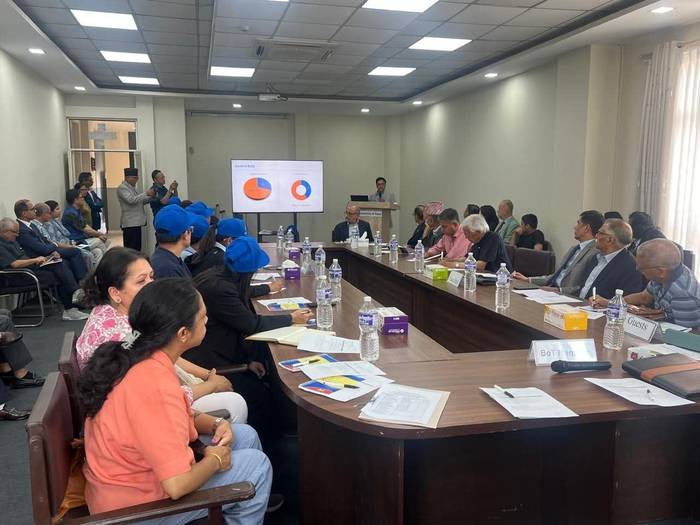



KATHMANDU, April 22 – To address the critical shortage of public policy professionals capable of navigating Nepal’s interdisciplinary and multidimensional challenges, the University of Nepal (UNepal) officially inaugurated its inaugural academic program, the Master of Public Policy (MPP), during an orientation ceremony on Wednesday. While the university plans to launch various bachelor-level programs in the near future, leadership chose the MPP as its first offering to immediately begin cultivating veterans and experts who can design evidence-based solutions for the nation’s complex policy landscape.
The "Cap-Wearing" Tradition: A New Professional Rite
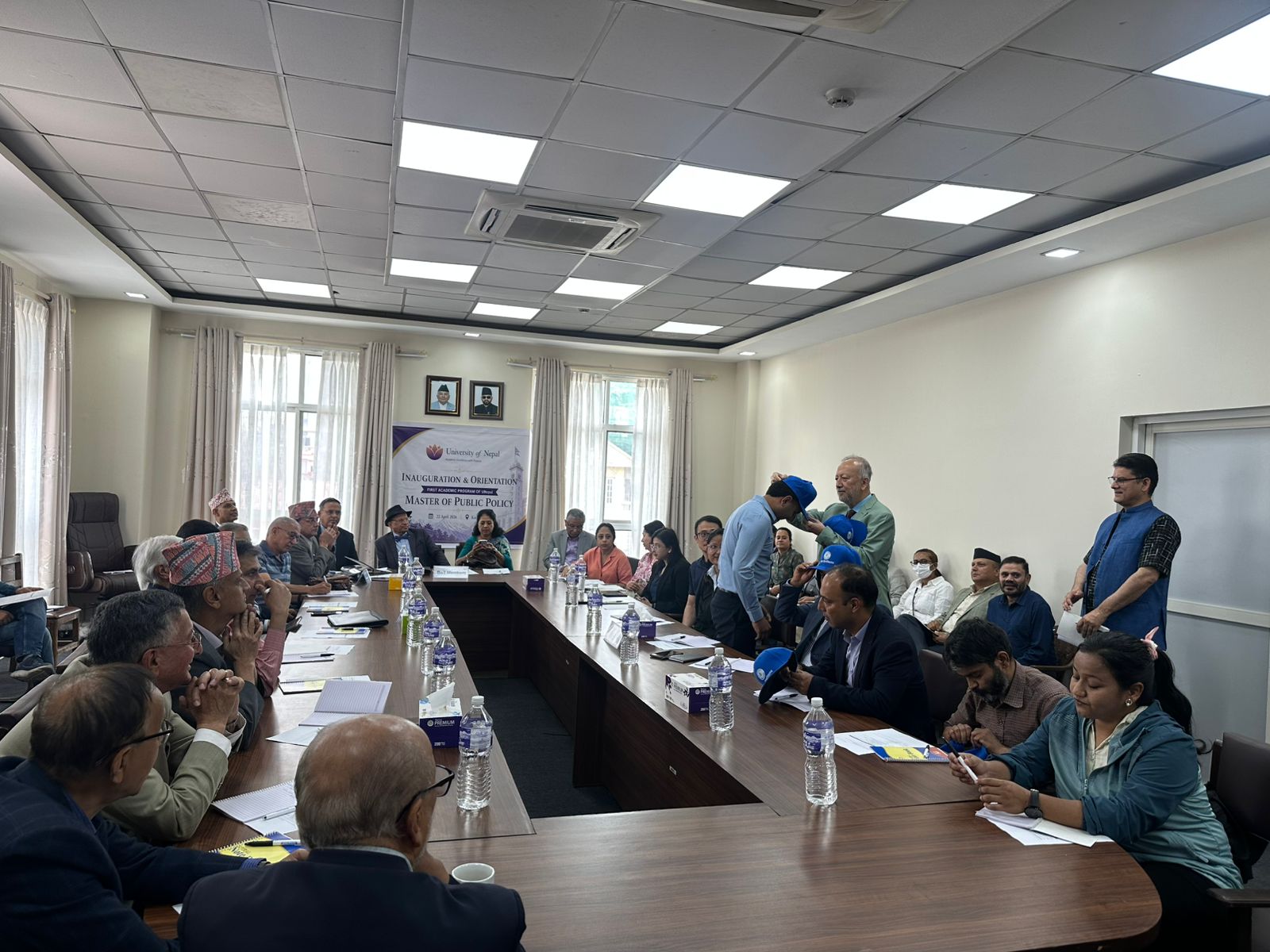
In a symbolic moment reminiscent of the "White Coat Ceremony" in medical education, a tradition championed by Vice-Chancellor Dr. Arjun Karki during his time as the founding VC of Patan Academy of Health Sciences (PAHS), the inaugural students participated in a Cap-Wearing Ceremony. This rite of passage marked their formal entry into the world of public policy; emphasizing the ethical responsibility and professional rigor required to lead Nepal’s future.
A Vision for Policy Leadership
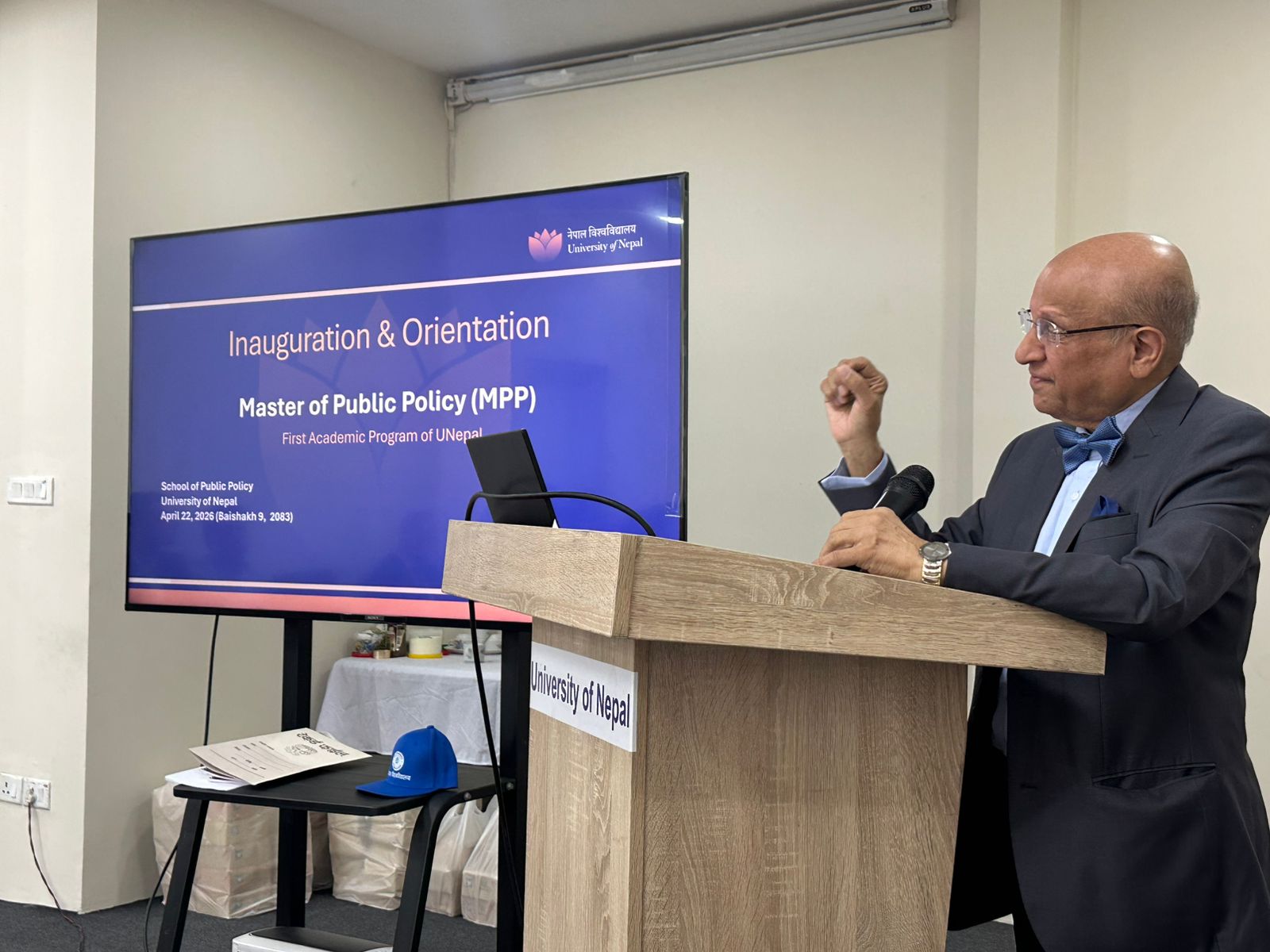
Chancellor Dr. Bindu N. Lohani addressed the first cohort of students, urging them to be both "thinkers and doers." He emphasized that the institution’s goal is to produce leaders who can navigate a rapidly changing world through data-driven, evidence-based policy.
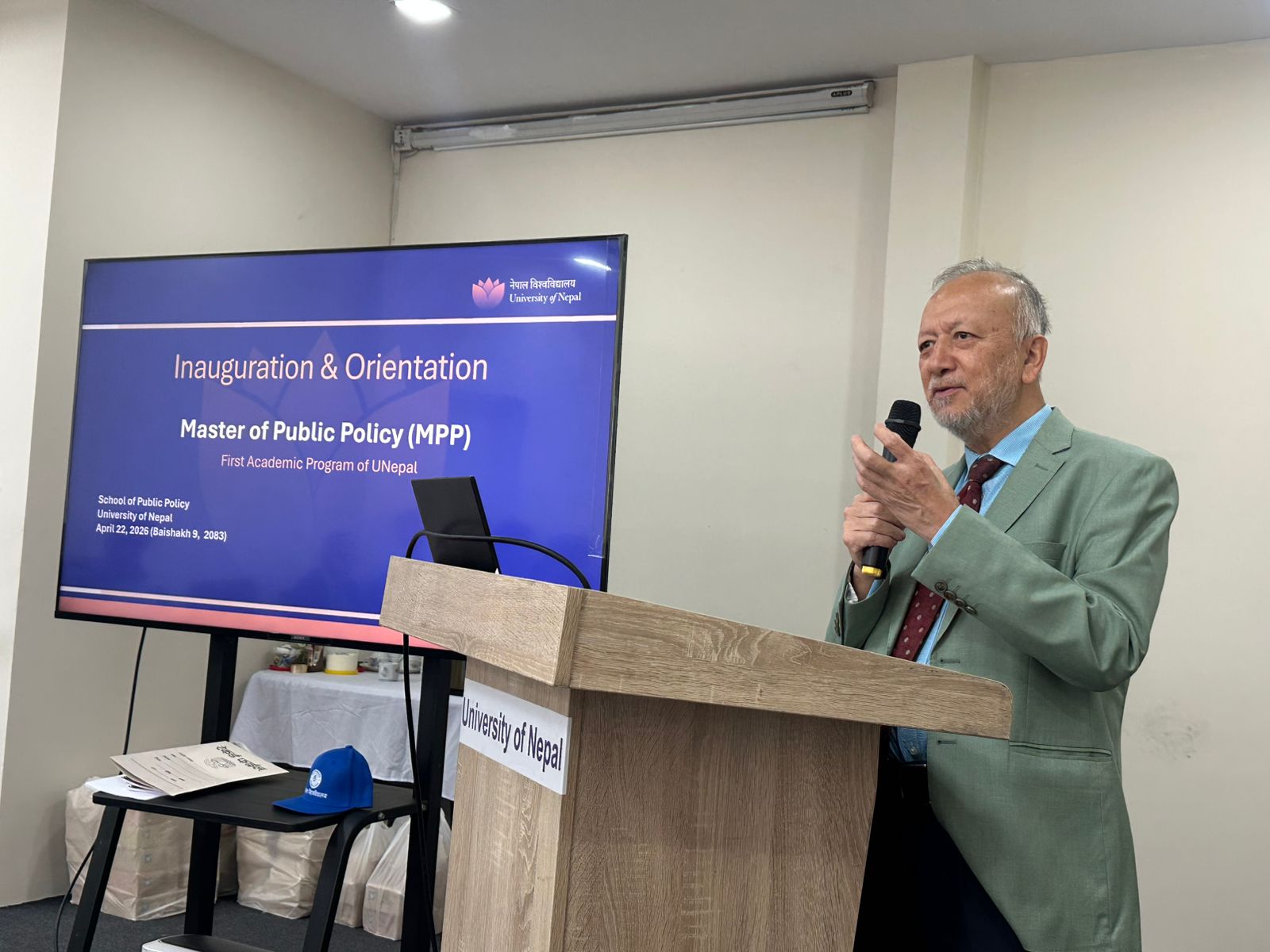
Vice-Chancellor Dr. Arjun Karki described the MPP as the university’s flagship program, challenging students to embody the "5Cs": Intellectual Competence, Critical Thinking, Communication Skills, Creative Thinking, and a deep Commitment to the Prosperity of Nepal.
The "New Parent" Philosophy: A Partnership in Learning
In a candid and humble reflection, Dr. Karki compared the university leadership to "new parents." He noted that while the founders are veteran academics, this is the first academic program of the University of Nepal.
"Even with the best intentions and processes, there may be things we fail to recognize in this first journey," Dr. Karki remarked. He emphasized that a strong feedback loop and constant reflection between students and faculty would be essential to refine the program and ensure the best outcomes for the cohort.
Closing the Talent Gap
Registrar and Program Director Dr. Surya Raj Acharya highlighted policy analysis role of government institutions like National Planning Commission and the Policy Research Institute, and need of well trained policy professionals. The MPP program, developed in collaboration with global institutions like the Maxwell School of Public Policy, USA and National Graduate Institute of Policy Studies (GRIPS), Japan aims to fill Nepal’s talent gap by combining local relevance with international standards.
Public Service Commission Member, Hon Madhav Belbase congratulated University Nepal for launching MPP that is well timed and has good potential in contributing evidence-based policy making in Nepal. MPP academic director, Dr. Rajendra Pandit had presented that details of MPP program.
The Inaugural Cohort: A Ray of Hope
The university is set to enroll an inaugural class of ten students, with seven already officially on board, including one international student from the USA.
Simran Khanal, a student representative with a legal management background, described the program as a bridge between social, legal, and political silos. Fellow student Shreeram Dahal, a Civil Engineer, called the launch a "ray of hope" for an ecosystem that has long suffered from mediocrity; he praised the "trusted leadership" for drawing him to the program.
A Stand-Alone Institution for Transformation
As a stand-alone, non-affiliating university established by an Act of Parliament in 2024, UNepal is designed to be a student-centered hub for innovation. Hriday Ratna Bajracharya from the University Grants Commission (UGC) noted that the program is strictly labor-market driven, which is intended to ensure graduates can compete globally while remaining grounded in Nepal's reality.
The first academic session is scheduled to officially commence on the 14th of Baishakh, 2083 BS.