

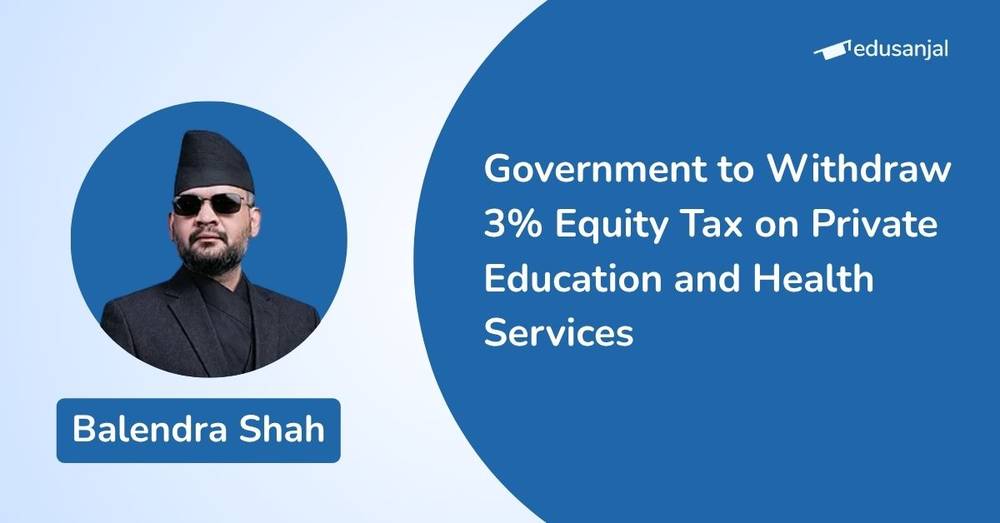




The Government of Nepal has decided to withdraw the 3% Equity Tax imposed on private education and health services. Prime Minister Balendra Shah announced that the tax will not be implemented, citing concerns that it would increase the financial burden on the public and create unnecessary hardship.
The decision has been made under Section 18 of the Finance Bill, which authorizes the government to reduce, increase, or fully or partially waive taxes, duties, fees, and other charges when necessary.
Key Details
- The government has decided not to implement the 3% Equity Tax on private education and health services.
- The Prime Minister said the decision was taken to avoid an additional financial burden on the public.
- The authority to waive the tax is provided under Section 18 of the Finance Bill.
- The Finance Bill containing the tax provision had been passed by the House of Representatives 23 days earlier.
- The government must inform the Federal Parliament and publish the decision in the Nepal Gazette after granting the tax waiver.
Supporting Details
The Finance Bill, which introduced the 3% Equity Tax on private education and health institutions, was passed by the House of Representatives on Asar 14. However, following public concern over the potential increase in education and healthcare costs, the government has decided not to enforce the tax.
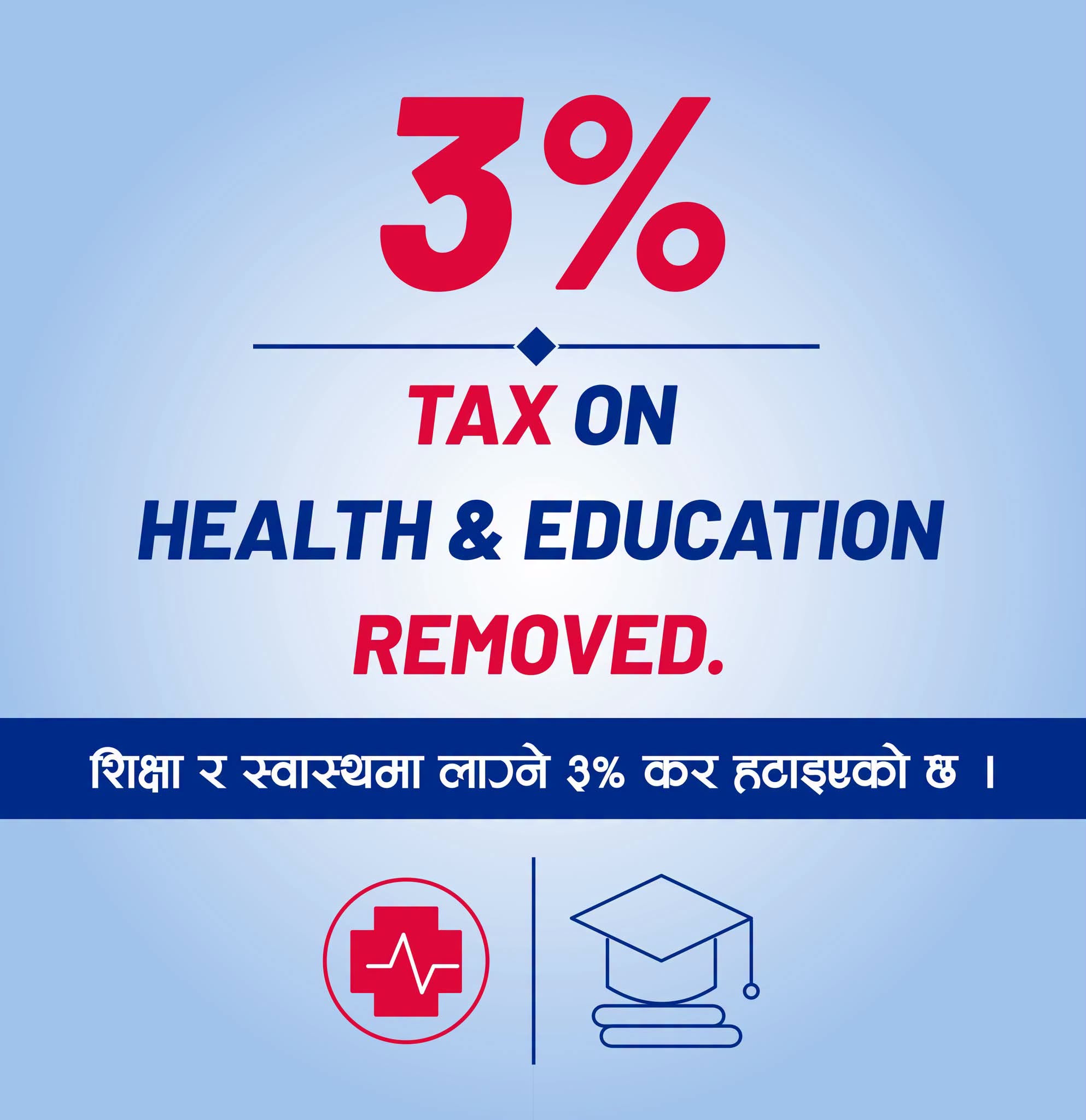
Announcing the decision through social media, the Prime Minister stated that implementing the tax would place additional financial pressure on citizens and lead to public dissatisfaction. Therefore, the government chose to withdraw the measure before implementation.
According to Ekram Giri, Joint Secretary and Spokesperson of the Federal Parliament Secretariat, the government has the legal authority to make such a decision because Section 18 of the Finance Bill delegates the power to adjust tax rates or grant full or partial exemptions.
Section 18 states that, notwithstanding existing laws, the Government of Nepal may reduce, increase, or fully or partially exempt any duty, fee, charge, or tax imposed under the Act or other prevailing laws whenever necessary.
The provision also authorizes the Ministry of Finance to reduce or exempt taxes applicable to non-profit public and community institutions, the federal government, provincial governments, local governments, and government-owned organizations. Additionally, relevant ministries may grant tax exemptions on imported goods for approved development projects, subject to contractual terms and applicable schedules.
After exercising this authority, the government is legally required to inform the Federal Parliament about any reduction, increase, or exemption of taxes. The decision must also be published in the Nepal Gazette, as required under Sections 18(5) and 18(6) of the Finance Bill.