




A task force formed to review Nepal's school-level curriculum has officially begun its work to revise the National Curriculum Framework (NCF) 2076 in line with changing educational needs and emerging global trends.
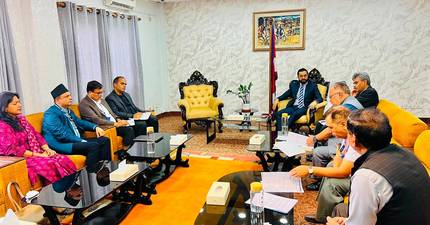
The 98th meeting of the National Curriculum Development and Evaluation Council, chaired by Education, Science and Technology Minister Sasmit Pokharel on Baisakh 11, formed the task force under the coordination of Bal Chandra Luitel, Dean of the School of Education at Kathmandu University.
The review comes as the five-year cycle of the National Curriculum Framework 2076 has been completed since its implementation in the academic year 2080 BS.
Speaking about the initiative, Dr. Luitel said that the task force's primary concern is determining the kind of human resources the education system should produce. He emphasized that the curriculum should not only develop academic competence but also promote social values, discipline, democratic principles, compassion, and respect.
The task force aims to submit its recommendations within approximately five months following consultations with education experts, policymakers, and other stakeholders. According to task force member Meenakshi Dahal, the revised framework is expected to support a broader restructuring of school education.
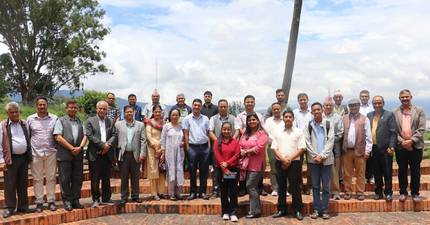
The task force includes education experts, curriculum specialists, and representatives from relevant institutions, while the Director General of the Curriculum Development Center, Yubaraj Paudel, serves as member secretary.
Dr. Luitel noted that the review seeks to make the curriculum more relevant to contemporary needs and changing social realities. The revised framework is expected to move beyond rote learning and focus on developing students' practical skills, ethical values, social responsibility, and overall life competencies.
The task force has already begun thematic studies and plans to engage stakeholders through both online and in-person consultations.
Education experts have long argued that Nepal's curriculum should be more practical, relevant, quality-oriented, and life-skill focused to prepare students for the challenges of a rapidly changing world. The Curriculum Development Center has stated that effective implementation of any curriculum reform will require continuous commitment and cooperation from all stakeholders.
The review will also consider local and global educational needs, technological advancements, emerging social challenges, and Nepal's commitments to the Sustainable Development Goals (SDGs) by 2030.
In a related decision, the National Curriculum Development and Evaluation Council has decided to discontinue internal examinations for students up to Grade 5 from the next academic session. The Ministry of Education has formed a separate seven-member task force, coordinated by Yubaraj Paudel, to recommend alternative assessment methods that reduce psychological pressure on young learners and strengthen continuous assessment practices in Grades 4 and 5.
The government's policy and program for the upcoming fiscal year also includes commitments to review curricula and assessment systems at all levels of education, expand employment-oriented education, increase investment in public education, strengthen regulation, and promote the use of artificial intelligence (AI) and information technology in teaching and learning.