


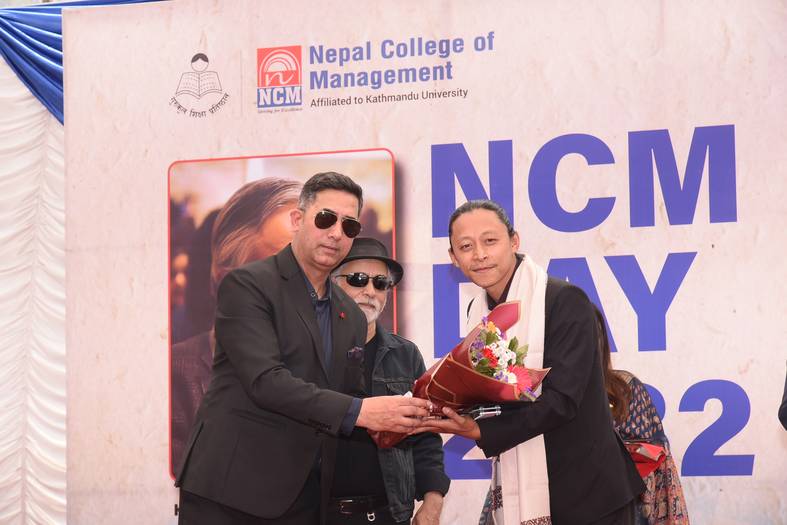



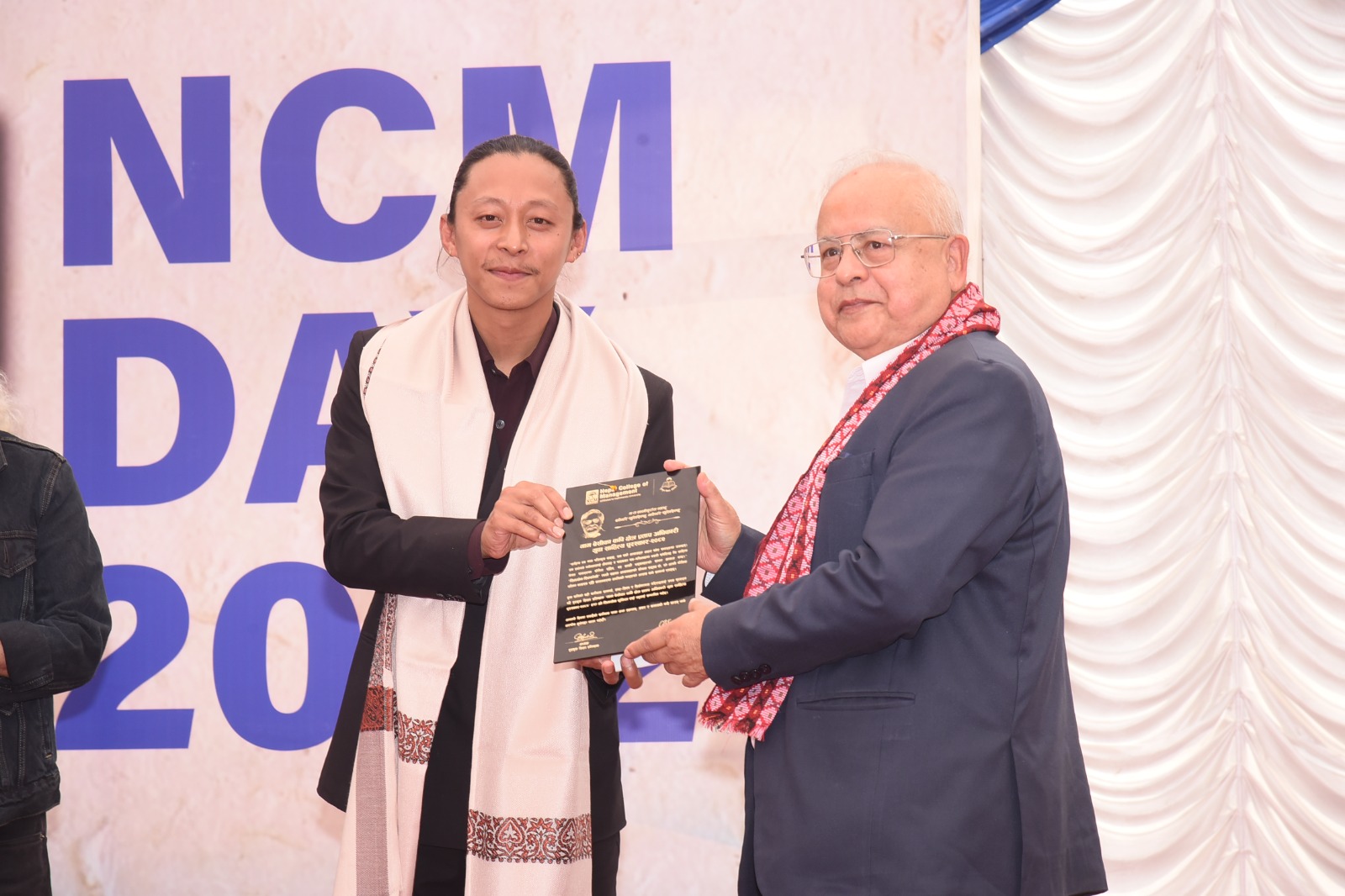
At a special ceremony held on Friday in Dhobighat, Lalitpur, young poet Simeyon Sukita Rai from Sikkim was honored with the “Gambensi Ka Kavi Kshetrapratap Adhikari Youth Literature Award–2082.” The award was presented during “NCM Day–2082,” jointly organized by Gurukul Education Foundation and Nepal College of Management (NCM), in recognition of his literary work Simeyon Symphony.
Among submissions received from Nepali-language writers across Nepal and abroad, Rai’s work was selected as the best. He received a cash prize of NPR 50,000, along with a trophy and a medal.
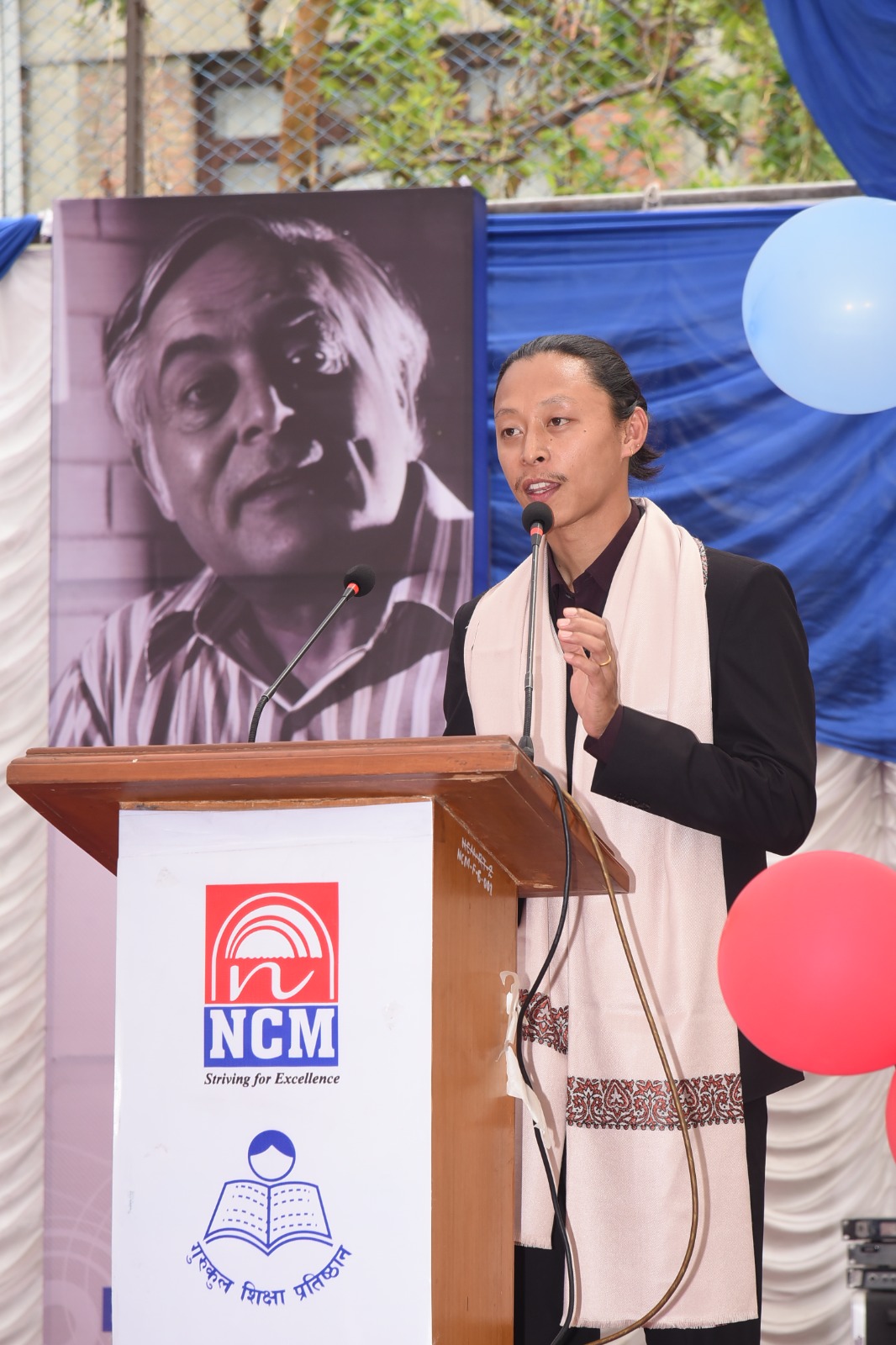
While accepting the award, poet Rai said, “I am from a village. I learned to write poetry while doing daily chores in the soil of Sikkim. Today, being able to cross borders and share this joy with Nepali-speaking communities has deepened my sense of responsibility.”
Other finalists in this category included Sandhyama Surya by Umesh Awasthi Adarsha, Ghamko Jara by Sabina Rai, and Ekdin Manisharu Farkinechan by Dostaj.
Last year, the award was won by young poet Season Shrestha for Hawama Aljhiyeko Swar. Other notable works from the previous year included Lati by Pallaviv, Ka by Subhasis, and Jaba Kavita Niskanchha Julusma by Suraj Rana.
According to award coordinator Amanpratap Adhikari, the award was established to preserve the literary legacy of the late Kshetrapratap Adhikari, a prominent figure in Nepali songs and poetry known as “Gambensi Ka Kavi,” and to encourage the new generation toward literature. He added that the award was open to young writers each year for their latest poetry collections. This year, four outstanding works were shortlisted from submissions received nationwide and internationally and sent to the jury panel for final selection.
The award was open to poetry collections written in Nepali, including both prose and verse, either ISBN-registered or self-published. Eligible candidates had to be under 35 years of age, with works published between Falgun 01, 2081, and Falgun 01, 2082.
The ceremony, held at the college premises in Dhobighat, Lalitpur, featured strong student participation, cultural performances, and a vibrant literary atmosphere.