




Quest International College successfully organized the Quest International Conference on Business, Technology, and Hospitality for a Sustainable Future on May 1–2 at its premises in Gwarko, Lalitpur. The two-day international event was coordinated by the Quest Research Management Cell with support from the University Grants Commission (UGC), Nepal.
Although this marked the college’s first independently organized international conference, it has previously co-hosted three such events. With this edition, the total number of beneficiaries across all four conferences has reached around 1,250 participants.
The conference witnessed the participation of nearly 500 attendees, including more than 75 researchers-from Bachelor’s level students to PhD scholars-representing universities from 12 countries such as India, Bangladesh, Thailand, Malaysia, and the United States, among others. Participants presented their research through both physical and virtual mediums, contributing to academic discussions in the fields of business, technology, and hospitality.
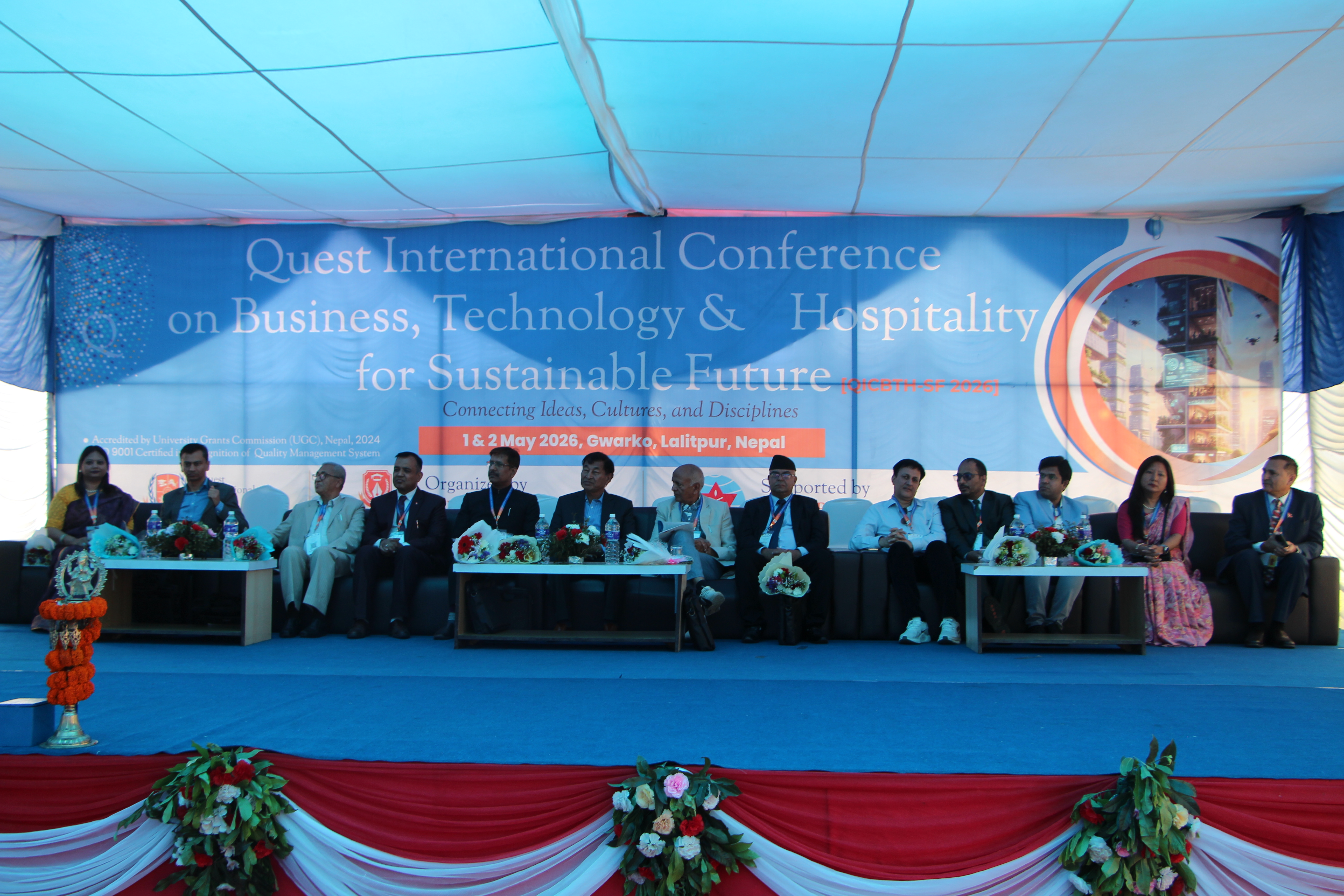
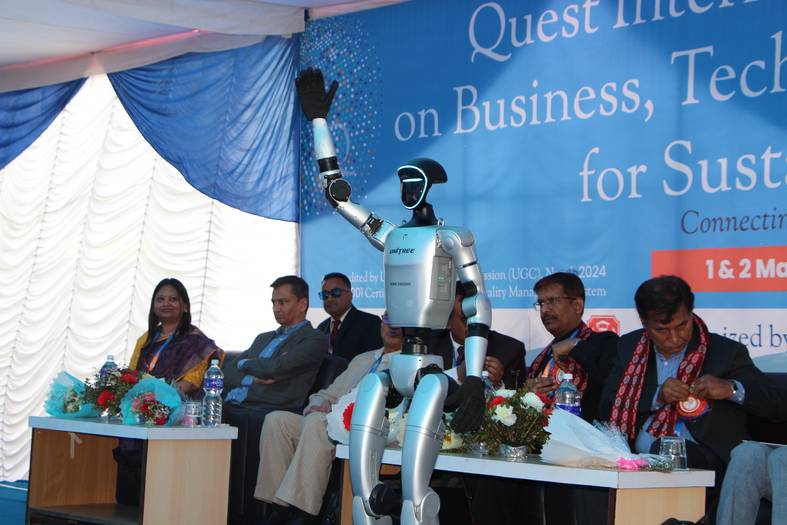
The event commenced with a vibrant opening ceremony featuring traditional Panche Baja, setting a culturally rich tone. A notable highlight was the demonstration of a humanoid robot, which interacted with guests and offered khada and badges to dignitaries, symbolizing a blend of tradition and technological innovation.
On the first day, the College Principal Udaya Raj Paudel delivered the welcome speech, followed by conference highlights presented by Dr. Niranjan Devkota, the conference convenor. The program also featured remarks from Guest of Honour Prof. Dr. Gyaneshwor Sharma, Dean of the Faculty of Management Studies at Pokhara University, and keynote addresses by Chief Guest Prof. Dr. Rajnish Ratna, Dean,Faculty of Management Studies at Gopal Narayan Singh University, India, along with Conference Chair Prof. Dr. Puskar Bajracharya. The sessions continued with a series of technical presentations.
The second day maintained similar momentum with plenary and technical sessions, followed by a panel discussion. The program was further enriched by more than five cultural dance performances representing Newar, Tharu, Tamang, Magar, and Chhetri communities, adding vibrancy to the conference experience.
The conference served as a dynamic platform for sharing innovative ideas, research findings, and scholarly perspectives aimed at addressing contemporary challenges and promoting sustainability. It also encouraged young researchers to pursue academic excellence while highlighting the role of research in driving positive and sustainable societal impact.