



Kathmandu – In a significant move toward digitizing and modernizing school-level education in Nepal, RoboAarambh has officially launched its flagship initiative, “Hamro Robotics School Launching Program.” The program aims to integrate Robotics, STEM, Artificial Intelligence (AI), and the Internet of Things (IoT) into the school curriculum to prepare students for the global workforce.
.jpg)
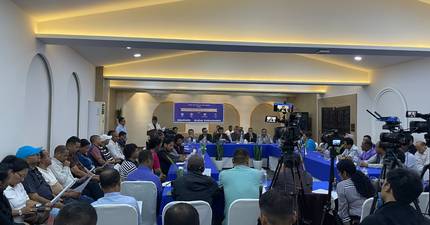
The launch event brought together over 45 headteachers, educators from 30+ schools, and industry experts to witness how technology-driven learning can bridge the gap between traditional classrooms and future industry demands.
Shifting from Rote Learning to Innovation
RoboAarambh is designed to move the Nepali education system away from traditional rote learning toward experiential, project-based models. The initiative focuses on nurturing "4C" skills: Creativity, Critical Thinking, Collaboration, and Communication.
.jpg)
During the event, CEO Er. Ujjwal Koirala emphasized that in the age of Intelligent Machines and Large Language Models (LLMs), students are no longer just competing with peers but with automation.
"This is no longer the age of rote learning, but the age of flexible, practical, and application-based learning. Our goal is to shape young minds to be adaptable and future-ready," Koirala stated.
.jpg)
A Structured Robotics Curriculum for Schools
One of the core highlights of the program is its grade-wise structured curriculum, designed to scale with a student’s growth:
Grade 6 (40 Hours): Basics of mechanical motion and no-code circuit development.
Grade 7 (45 Hours): Soldering and chip-based programming.
Grade 8 (45 Hours): Task-specific mini-projects using processor chips.
Grade 9 (45 Hours): Advanced robotics integration with higher-level coding and AI.
.jpg)
Live Showcase: 40+ Robotics and STEM Products
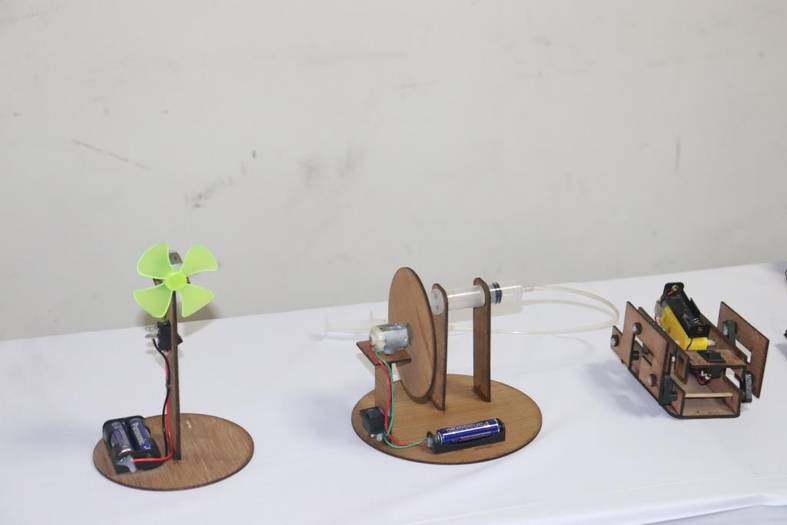
The event featured an extensive live demonstration of over 40 robotics products, led by Chairman Er. Ganesh Bikram Singh Ale. Attendees observed a variety of advanced applications, including:
Unmanned Ground Vehicles (UGV): Fire-fighting robots, bomb disposal units, surveillance robots, and maze-solvers.
Unmanned Aerial Vehicles (UAV): Racing drones, Hexacopters, and VTOL (Vertical Take-Off and Landing) systems.
STEM Kits: Hydraulic lifts, periscopes, and "Do Not Touch" game circuits designed for hands-on classroom engagement.
Chairman Ale remarked that students should transition from being mere "users" of technology to "builders" of technology.
.jpg)
Keynote Insight: Human Capital and Green TVET
Addressing the gathering, Prof. Dr. Sudan Jha highlighted the intersection of AI, Robotics, and Green TVET principles. He noted that school-level technology education is the essential bridge between university readiness and sustainable development.
.JPG)
The program concluded with the official launch of the RoboAarambh website, marking the start of what the leadership describes as a "transformative movement" for classrooms across Nepal. By aligning school education with industry standards, RoboAarambh seeks to ensure that Nepali graduates are equipped to solve both local and global challenges.